

Mindfulness
Mindfulness for athletes and performers can be easier said than done, but there is a lot of research supporting its benefits. Regular mindfulness practice has been linked to increased athletic ability, performance, readiness, and overall success.
Mindfulness practices can be incorporated into training sessions, rehearsals, performances, and competitions to strengthen performers' minds as well as their bodies. Learning to stay present, focused, and aware can help performers manage pressure, reduce distractions, and perform at their best.
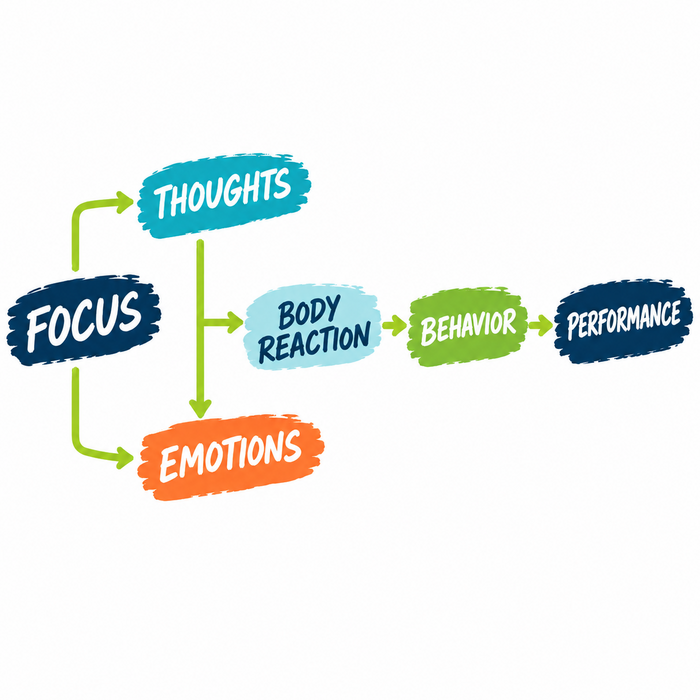
One way to understand the value of mindfulness is through the Performance Matrix.
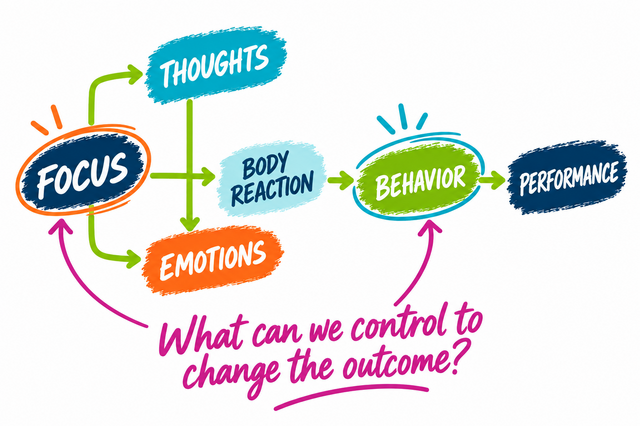
Regular mindfulness practice can help you choose what you focus on during an important game or performance. What we focus on influences our thoughts and emotions, which then affect our body’s response, influencing behavior and ultimately performance.
Recovering from Mistakes
Mistakes are a part of performance and competition.
Most performers want to do their best and succeed without making mistakes, but everyone makes mistakes— from novices to professionals! Whether delivering a performance, crossing a finish line or scoring points, mistakes are part of the process. If no one ever made a mistake, there would be no challenge, no improvement and no excitement.
You’re not alone!
Teen performers often share that making a mistake during a performance, competition, audition, or game can stressful and one of their biggest worries. These are some of the most common thoughts and feelings teen athletes and performers have described through conversations with Change to Chill:
Common Concerns Reported by Teens
Coping Strategies
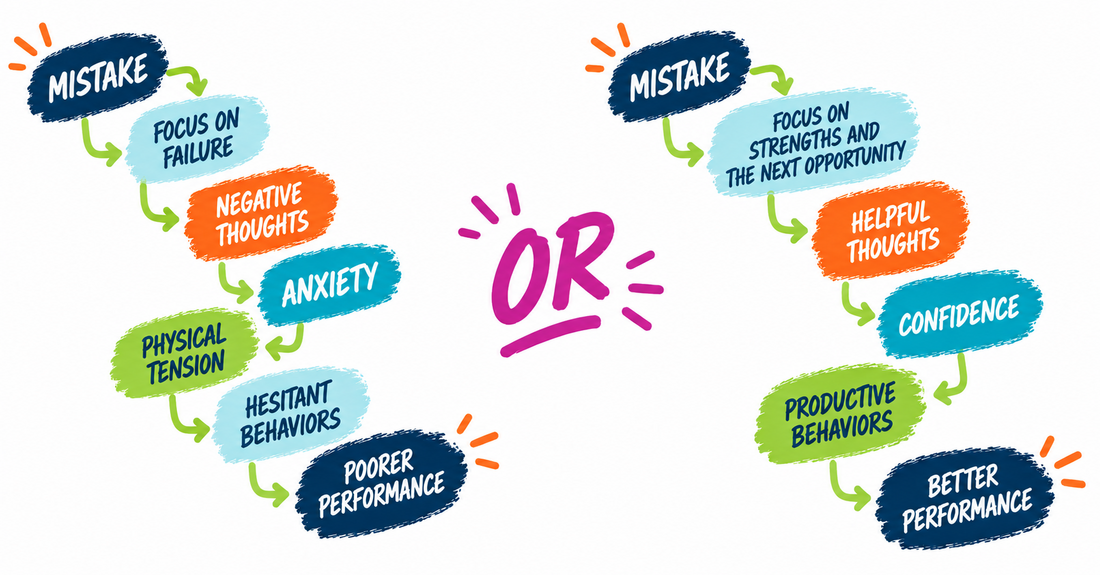
We can’t stop mistakes from happening and we can’t control our body and brain’s natural response to the stress of making a mistake. However, with practice, we can choose where we focus our attention after a mistake and our next actions. This choice influences our performance.
For example:
What Helps?
Both teen performers and professionals have found ways to move through mistakes and keep performing.
Remember
Professional performers and athletes know that mistakes are sure to happen. They rely on a growth mindset, teamwork and support from others to learn, improve and move forward.

Performance Anxiety
The fear of making a mistake can lead to performance anxiety. Performance anxiety is a feeling of nervousness or apprehension that can occur when performing in front of an audience, whether it's public speaking, music, acting, dance or athletic competition. It is a common experience for many teens.
Common symptoms of performance anxiety
- Rapid heartbeat and palpitations
- Sweating and trembling
- Nausea and stomach discomfort
- Difficulty breathing and feeling of choking
- Dizziness and lightheadedness
- Feeling of impending doom or disaster
Strategies for Managing Performance Anxiety
Remember, performance anxiety is normal and can be managed with practice, preparation, and relaxation techniques.
How can you help others?
After a mistake, you can help other members of your cast or teammates by acknowledging it briefly and then helping them move forward. Refocus their attention on what they do well, remind them of their strengths, and encourage them to concentrate on what they will do next rather than dwelling on the error.
Coaches and directors can do the same and also encourage their players or cast to support one another. Other ways coaches/directors can create an environment that supports confidence and resilience include:
- Use positive reinforcement to motivate and build confidence.
- Set high but realistic expectations and avoid placing excessive pressure on individuals.
- Encourage mental recovery and stress management by talking about healthy coping skills as part of athletic/performance training.
- Promote healthy sleep habits and overall mental well-being.
- Build recovery time into schedules by implementing regular days off.
Caregivers and parents can reinforce these same practices by helping young athletes and performers maintain perspective, learn from mistakes, and regain confidence quickly. They can help young people see themselves as more than athletes or performers, with strengths and value beyond their performance.